Multitasking skincare can simplify a routine, reduce clutter, and make consistency easier—if the formulas truly match skin needs and play well with the rest of the lineup. The goal isn’t to collect “do-it-all” products; it’s to choose a few high-utility staples that don’t compromise cleansing, hydration, barrier support, or daily protection. The checkpoints below help separate genuinely efficient formulas from ones that look convenient on the label but create irritation, pilling, or under-protection in real life.
A multitasking skincare product is one formula designed to address two (or more) core needs at once—without weakening results. Think moisturizer + SPF, serum + moisturizer, or cleanser + gentle exfoliation. The best multitaskers reduce steps while still doing the “main job” well.
Some benefits naturally reinforce each other. Others compete, sting, or leave skin more reactive—especially when used daily. Use this as a quick compatibility check before buying.
| Combo | Good fit when… | Pause if… |
|---|---|---|
| Moisturizer + SPF | Daily routine needs fewer steps; skin tolerates sunscreen filters; finish layers well under makeup | Not applying enough product; stinging/irritation; needs separate moisturizer for very dry skin |
| Hydrator + Barrier Repair | Dryness, sensitivity, or over-exfoliation; wants fewer products | Frequent pilling with other layers; heavy occlusives trigger breakouts |
| Cleanser + Gentle Exfoliation | Dullness with low irritation risk; prefers quick showers/AM routine | Using retinoids/acids elsewhere; barrier feels tight or dry after cleansing |
| Serum-Moisturizer Hybrid | Normal-to-oily skin wants fewer steps; humid climate | Very dry skin needs richer layering; active concentration too low to matter |
| Tinted SPF + Light Coverage | Minimal makeup routine; wants quick complexion evening | Shade mismatch; needs frequent reapplication; prefers separate foundation |
Multitasking products only feel “smart” when the formula supports your main goal and stays comfortable enough to use daily. Before checkout, scan for these details.
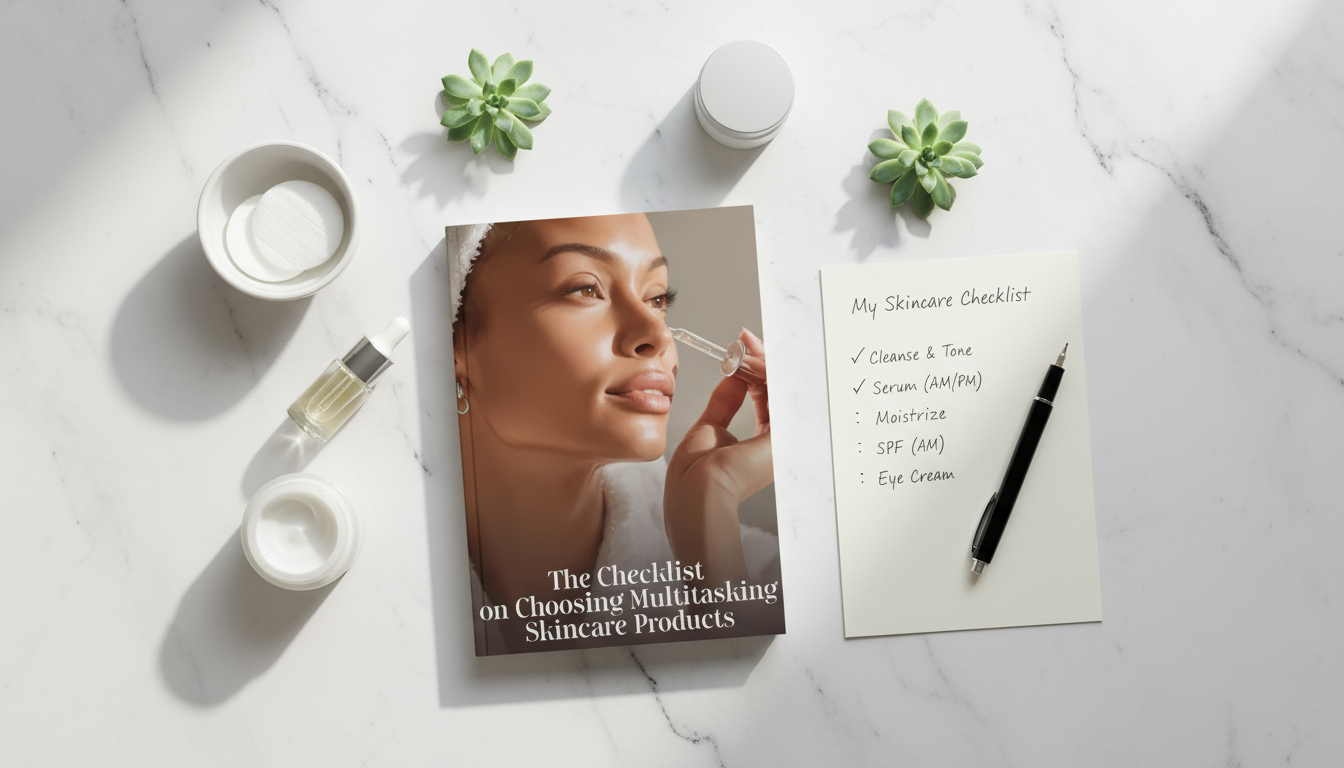
For a quick, printable way to shop smarter, keep The Checklist on Choosing Multitasking Skincare Products (printable digital download) handy while comparing ingredient lists and claims.
Pick the one step that creates the biggest consistency win (often a comfortable daily SPF). Humid climates typically favor lighter textures; cold or dry climates often need more emollients and occlusives—even in a minimal routine. For sunscreen basics and correct use, see guidance from the American Academy of Dermatology Association and the U.S. FDA.
If your streamlined routine includes targeted age-support steps, pair smart multitasking with a focused pick using Picking the Perfect Serum for Mature Skin (printable checklist).
It can if it’s a broad-spectrum SPF product and you apply enough to reach the labeled protection, which many people don’t do with moisturizers. If the finish feels heavy or pills, reapplication often gets skipped—making a dedicated sunscreen the more reliable choice.
They can be, because fewer steps may mean fewer chances to encounter irritants. The key is choosing a gentle, fragrance-free formula with barrier-support ingredients and patch testing before using it all over.
There isn’t a universal number; it depends on compatibility, strength, and your skin’s tolerance. Be cautious when a single leave-on product combines multiple high-irritation actives (like strong exfoliants plus retinoids), and introduce any active-heavy product slowly.












Leave a comment