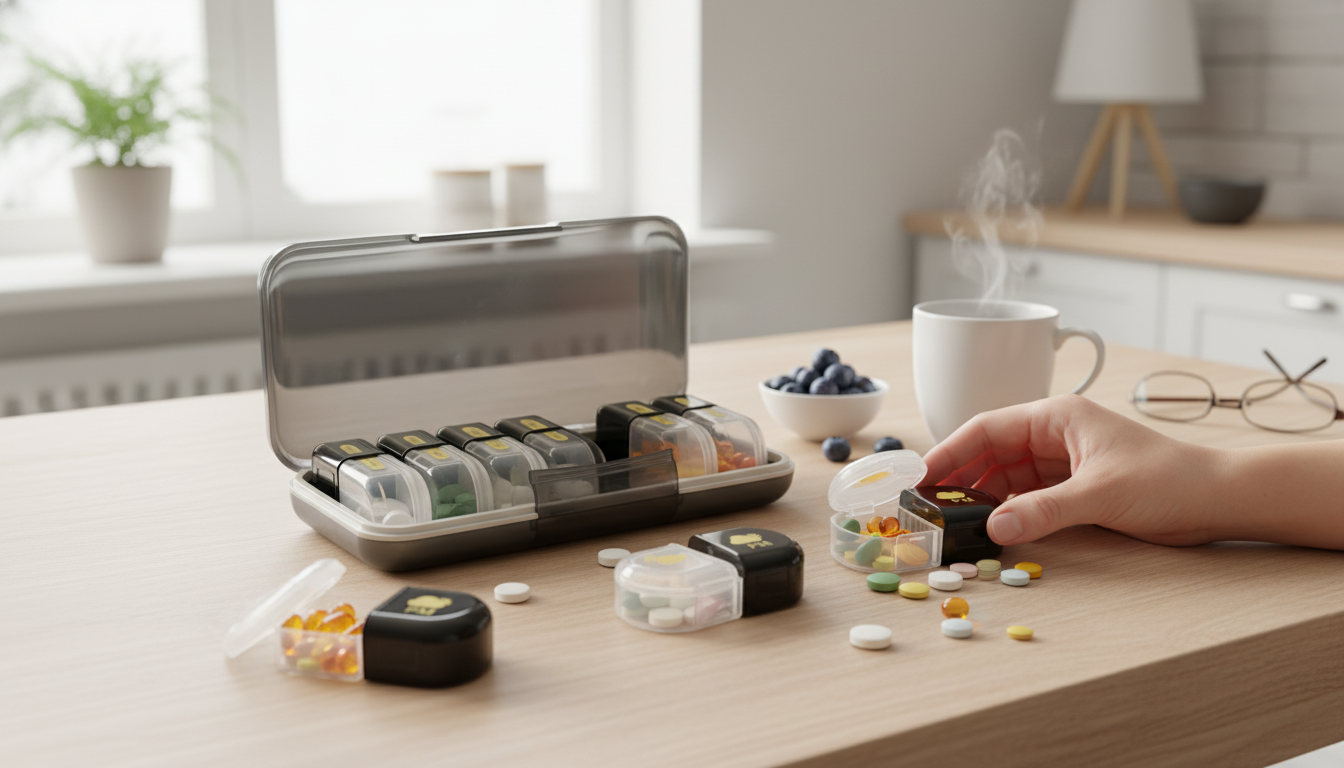
A roomy weekly pill organizer can make daily schedules easier to follow—especially when doses include multiple tablets, larger supplements, or morning/noon/evening routines. The right setup reduces last-minute bottle searching, helps make dosing patterns visible at a glance, and can cut down on missed or doubled doses. Below are practical cues for deciding when extra capacity matters, which features tend to improve day-to-day ease, and how to fill a full week quickly with fewer mix-ups.
Not everyone needs a larger organizer, but it becomes a clear upgrade when pills simply don’t fit comfortably in compact compartments. An extra-capacity design is especially helpful in these situations:
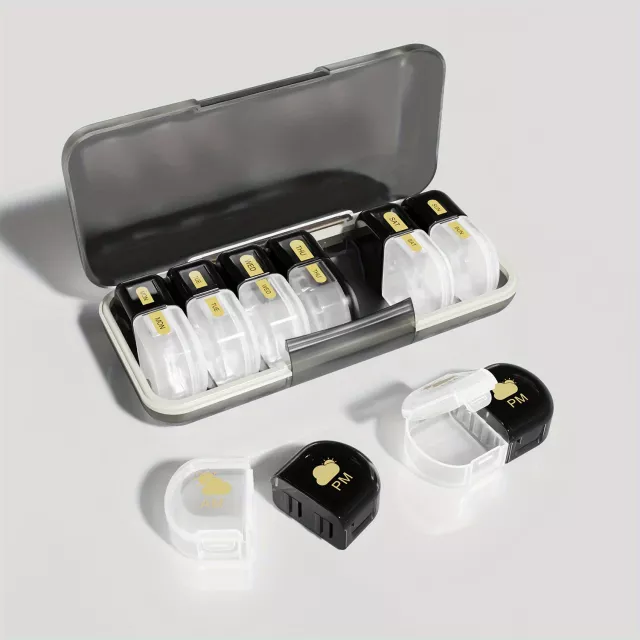
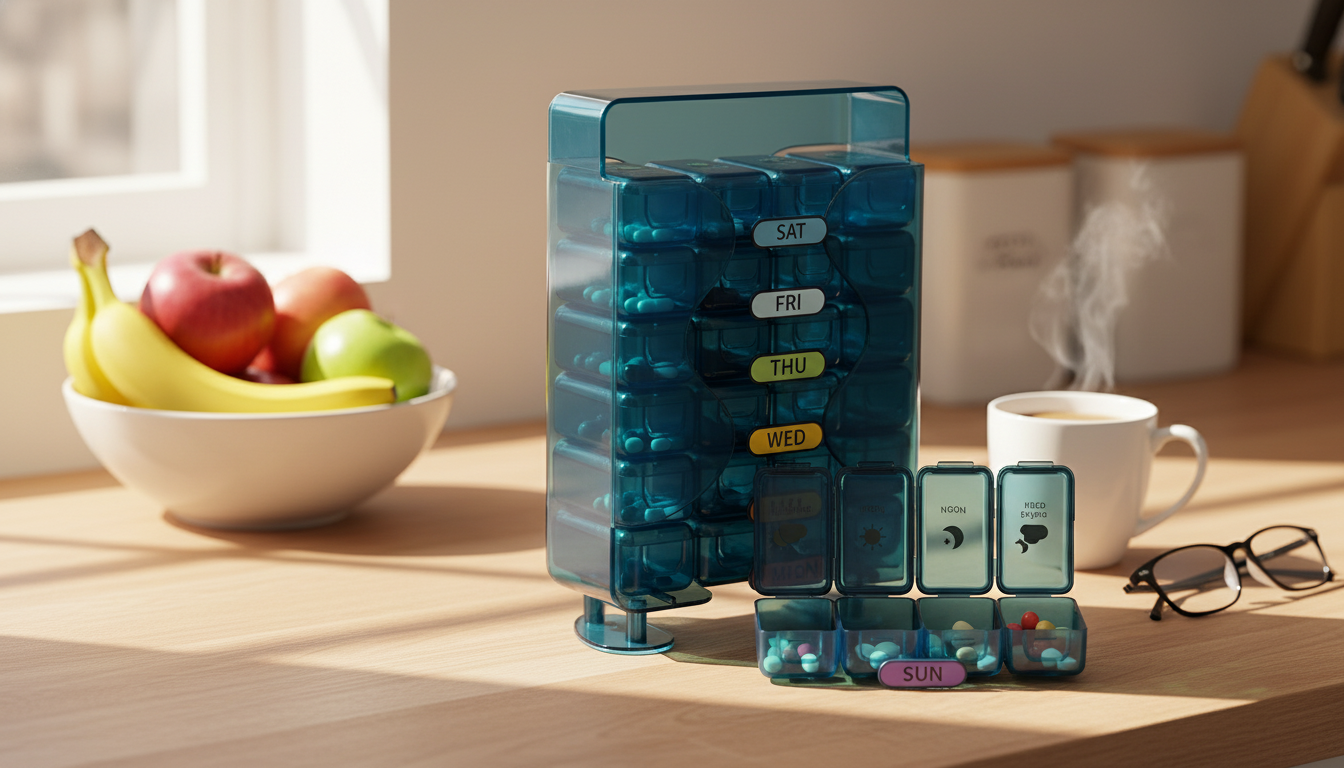
Extra space is a great start, but the small design details often determine whether an organizer feels effortless or frustrating. When comparing weekly organizers, focus on these practical features:
An extra-capacity organizer is built for people who need more room per day, helping reduce the temptation to “double stack” pills or keep loose doses outside the original containers. It’s also a practical way to combine medications and supplements in one place so the week’s plan is visible at a glance.
This approach can be especially helpful for caregivers filling weekly doses, since larger compartments reduce sorting time and the need to juggle multiple organizers. Many people also use a larger organizer as a stable “home base” on a nightstand, kitchen counter, or in a dedicated health drawer—then pair it with a small carry option when they’ll be away from home during dosing windows.
For general medication-use guidance and reminders about taking medicines safely, MedlinePlus is a helpful reference: MedlinePlus: Taking Medicines.
| Feature | Extra-capacity weekly organizer | Compact weekly organizer |
|---|---|---|
| Best for | Multiple tablets per dose, large supplements, caregiver filling | Light travel, minimal pill volume, pocket carry |
| Compartment room | More space per day | Less space per day |
| Portability | Better for home storage; may be bulky for bags | Easy to bring along |
| Risk of cramped lids | Lower (less overfilling) | Higher if pill volume is large |
For broader public-health guidance on preventing medication errors, see the CDC: Medication Safety Program. If you end up with discontinued or expired medicines while updating routines, disposal guidance is available here: FDA: Where and How to Dispose of Unused Medicines.
Capacity depends on the organizer’s compartment dimensions and the size/shape of your pills. For a realistic check, test-fit your largest single-dose stack and avoid overfilling so the lid closes flat and stays secure.
Many people do, but some medications are sensitive to moisture or light, and certain prescriptions have specific storage instructions. Check the prescription label and confirm with a pharmacist if you’re unsure about transferring a particular medication.
Use an up-to-date medication list, fill one bottle at a time, and match each pill to the correct day/time slot before moving on. Finish with a quick visual review of the whole week and confirm any recent regimen changes with the person’s pharmacist or care team.









Leave a comment