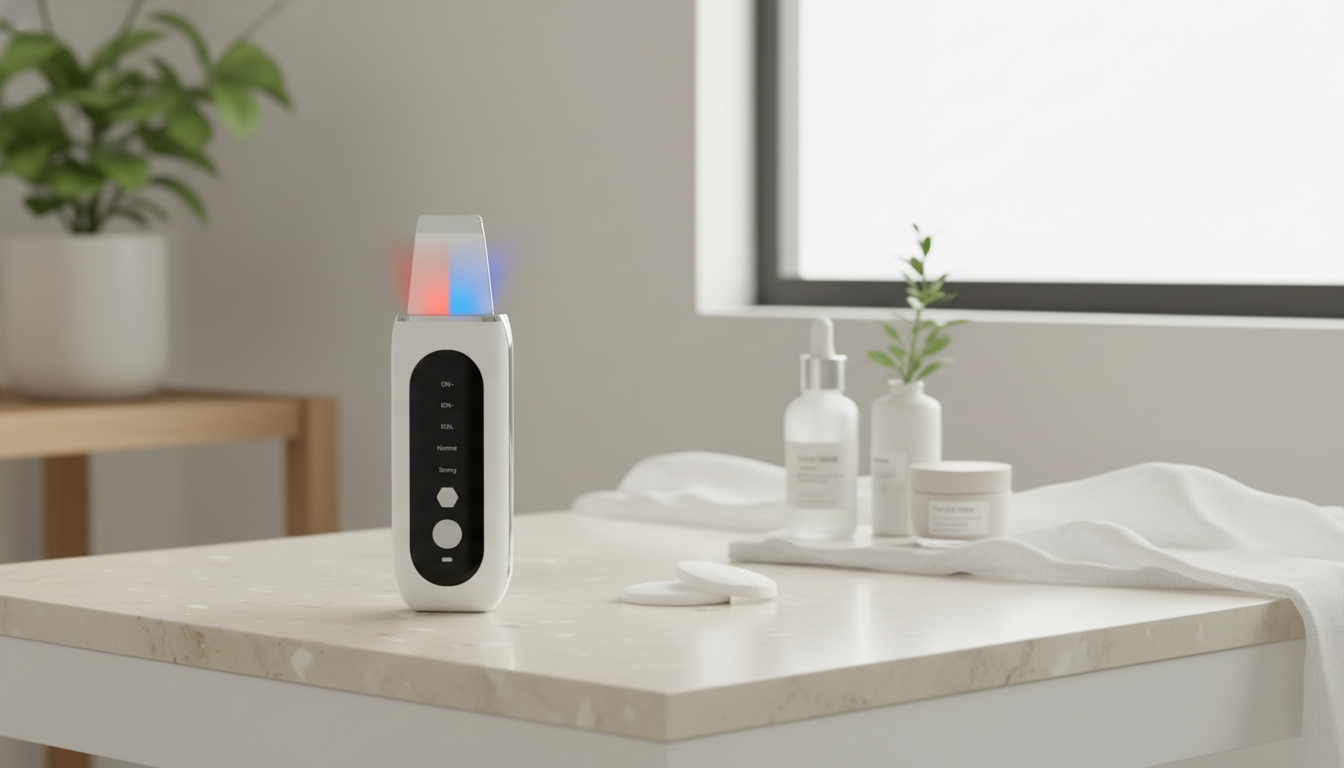
An at-home skin scrubber can help lift buildup from pores, smooth rough texture, and support a clearer-looking complexion when used with the right technique. This guide explains how an EMS ultrasonic skin scrubber works, what LED therapy adds, who it suits best, and how to use it safely for consistent results.
A modern ultrasonic skin scrubber is built for gentle, routine-friendly pore care—especially in areas where congestion tends to show up first.
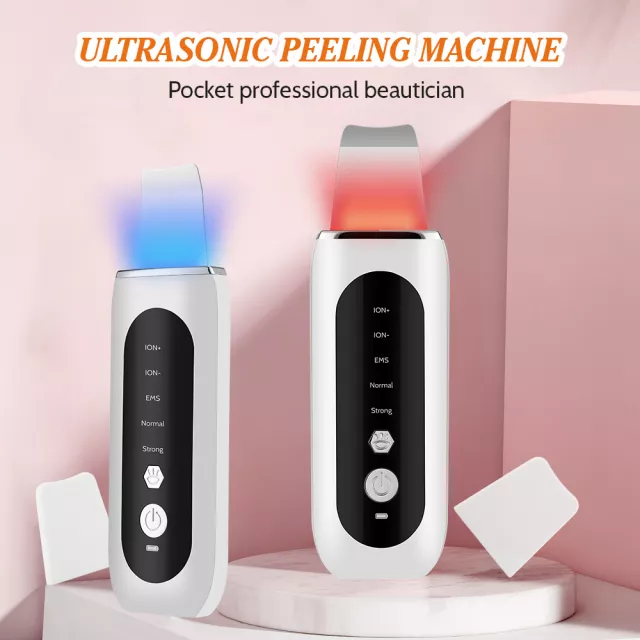
If you want a multi-step tool that covers cleansing support plus optional LED, take a look at the EMS Ultrasonic Skin Scrubber & Blackhead Remover with LED Therapy.
Ultrasonic vibration is commonly used to dislodge buildup on the skin’s surface when the face is kept damp, allowing the spatula edge to glide. The goal is to “lift” residue—not scrape skin—so technique matters more than strength.
EMS (electrical muscle stimulation) in beauty devices is generally used at low levels to provide a mild tingling sensation and support a firmer-feeling routine when used as directed. It’s best viewed as a finishing step paired with slip (serum/gel) rather than something to “power through.”
Results depend heavily on prep (warmth + moisture), technique, and post-care hydration rather than force.
LED is often used as a supportive step alongside cleansing and moisturizing, not a stand-alone fix. Different light colors are commonly associated with different skincare goals (comfort, clarity, tone), and consistency usually matters more than intensity—short sessions repeated over time tend to fit best into real routines.
Avoid shining light into eyes; keep the device moving and follow recommended session lengths. For a broader overview of how LED therapy is used in skincare and clinical settings, see the Cleveland Clinic’s LED light therapy guide.
| LED color | Often used to support | Good routine pairing |
|---|---|---|
| Red | Comfort and a more even-looking complexion | Hydrating serum + moisturizer |
| Blue | Clarifying routines for blemish-prone skin | Gentle cleanser + non-comedogenic moisturizer |
| Green | Balanced-looking tone and reduced appearance of redness | Soothing products (fragrance-free when possible) |
For extra guidance on picking supportive hydration after exfoliation (especially for drier or mature-feeling skin), the Picking the Perfect Serum for Mature Skin (Printable Skincare Checklist) can help narrow down what to look for based on feel and finish.
If acne is a major concern, it’s worth reviewing practical skin-care guidance from the American Academy of Dermatology Association to avoid over-stripping and to keep routines barrier-friendly.
If you’re using LED afterward, keep sessions short and routine-based. For safety considerations around light-based cosmetic devices, the FDA’s overview of cosmetic laser and light-based therapies is a helpful reference.
It can help lift surface buildup and reduce the look of congestion, but blackheads can return as oil and dead skin accumulate. Consistent cleansing, gentle exfoliation, and a non-comedogenic moisturizer plus daily sunscreen usually make results last longer.
Start 1–2 times per week on damp skin with very light pressure, then adjust based on how your skin feels over the next 24 hours. Overuse can compromise the skin barrier and cause redness, tightness, or sensitivity.
Many at-home LED routines use short, consistent sessions, but the safest approach is to follow the device instructions and avoid eye exposure. If you notice irritation or increased sensitivity, reduce frequency or pause until skin feels normal.










Leave a comment