Double Edge Safety Razor for Women: A Reusable Single-Blade Shaver for a Smoother Routine
A double edge safety razor replaces disposable cartridges with a durable handle and inexpensive, replaceable blades. With the right technique, it can deliver a close shave while cutting down on waste and ongoing shaving costs—especially for legs, underarms, and the bikini line. For more guidance, see Best Double Edge Razor Blades for Women.
Why switch to a double edge safety razor
If you’re used to multi-blade cartridges, a safety razor can feel like a throwback—until you notice how streamlined the routine becomes. Instead of swapping a bulky plastic head, you replace only a thin steel blade and keep using the same handle. For further reading, see Switching to a Safety Razor.
- Less waste than multi-blade cartridges: only the blade gets replaced, not an entire plastic cartridge.
- More control: a single blade helps limit the “multiple blades scraping the same patch” effect that can contribute to irritation.
- Lower long-term cost: standard DE blades are widely available and often cost less per shave than cartridges.
- Simple, travel-friendly setup: one handle plus a few blades can cover weeks of shaves.
- Great for sensitive-skin routines: good prep, slick lather, and light pressure can make a noticeable difference.
Product overview: reusable single-blade shaver with 10 blades
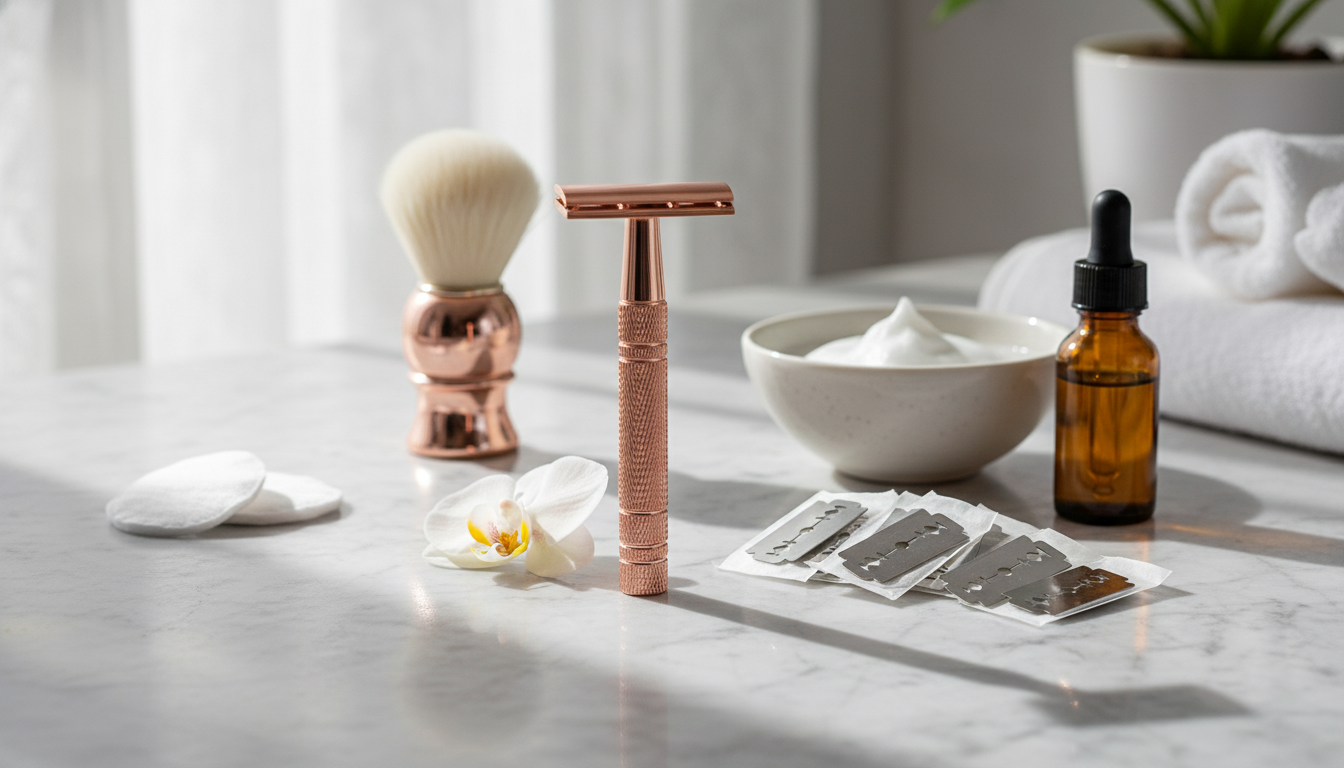
A practical way to start is with a reusable safety razor that includes blades right in the box. The Double Edge Safety Razor for Women – Reusable Single Blade Shaver with 10 Blades is designed for routine body shaving—especially areas where a controlled angle helps (legs, underarms, and careful touch-ups). Because it uses the classic double-edge format, you can flip to a fresh side during the same shave if needed.
- Reusable handle built for everyday body shaving
- Includes 10 replaceable double-edge blades so you can start immediately
- Two usable blade edges for flexibility during a shave
- A straightforward option for building a consistent, low-waste routine
- Ideal for anyone moving away from disposables without adding complicated steps
Quick details
| Item |
What to expect |
| Type |
Double edge safety razor (reusable handle) |
| Blades included |
10 double-edge blades |
| Replacement cycle |
Swap blades when shaving feels rougher or requires extra passes |
| Best for |
Legs, underarms, and careful touch-ups |
| Goal |
Close shave with less waste than disposable cartridges |
How to use a safety razor comfortably (step-by-step)
A safety razor rewards calm, deliberate technique. The goal is glide—not force—so the blade cuts hair cleanly at skin level without repeated scraping.
- Prep first: Soften hair with a warm shower, bath, or warm compress for a few minutes.
- Use a slick shaving medium: Shave gel, cream, or a rich soap lather helps the blade move smoothly and reduces skip.
- Hold a shallow angle: Start with the cap against your skin, then slowly tilt until the blade just begins to engage the hair.
- Use light pressure: Let the weight of the razor do the work. Pressing down is a fast path to nicks and razor burn.
- Short strokes, rinse often: Especially on legs and underarms, product and hair can build up quickly—rinsing keeps the edge clear.
- Shave with the grain first: If you want closer results, re-lather and do a second pass across the grain. Avoid repeated dry passes.
- Finish with a calm-down routine: Rinse with cool water, pat dry, then apply a fragrance-free moisturizer or soothing lotion.
Avoiding bumps and irritation on legs, underarms, and bikini line
Razor bumps can happen with any method, but small habit changes often reduce them. For evidence-based tips, see the American Academy of Dermatology Association’s guidance on preventing razor bumps and burns.
- Exfoliate gently 1–3 times per week: Keep it mild, and avoid exfoliating immediately before shaving if your skin is reactive.
- Never shave over bare skin: Reapply lather before each pass—even for quick touch-ups.
- Reduce passes on sensitive zones: Fewer careful strokes typically beat “chasing perfect smoothness” every time.
- Use a fresh blade when irritation starts: Dull blades pull hair and can create micro-scrapes that sting afterward.
- Underarms: Hair growth can shift direction. Use short strokes and change direction as needed.
- Bikini line: Keep skin gently taut, use minimal pressure, and stop if the area starts to feel tender.
- Post-shave: Avoid tight clothing right away and skip heavy fragrance products on freshly shaved skin.
Blade care and handling (safety basics)
DE blades are thin and sharp, so a little caution goes a long way. For general consumer guidance on hair removal and safety, the U.S. Food & Drug Administration’s overview of hair removal products and devices is a helpful reference.
What makes a good safety razor for women’s shaving
When a safety razor may not be the best fit
Self-care add-ons to round out your routine
FAQ
Is a double edge safety razor good for women’s legs and underarms?
Yes—many people get a very close, comfortable shave with proper prep, a shallow angle, and light pressure. Underarms often need extra-short strokes and direction changes because hair growth can vary across the area.
How often should the blade be replaced?
Most people replace a blade every few shaves, depending on hair thickness and how often they shave. If you notice tugging, needing extra passes, or more post-shave sting, it’s usually time for a fresh blade.
Does a single blade help reduce razor bumps?
It can help because there’s less repeated scraping compared to multi-blade cartridges, but bumps still depend on hair type and technique. Consistent prep, fewer passes, and soothing aftercare tend to matter most.
Recommended for you













Leave a comment