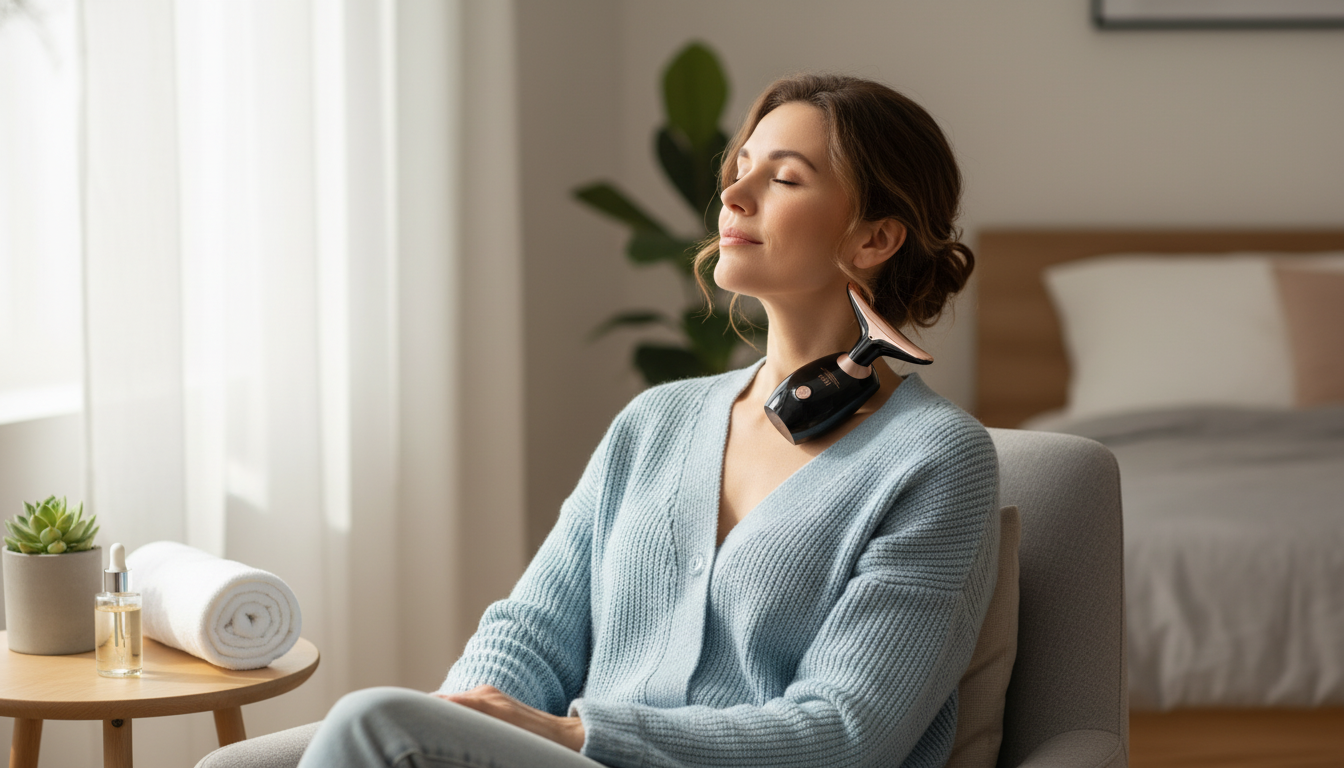
A compact vibrating massager can make daily neck and face care feel easier and more consistent—especially when paired with a simple routine and realistic expectations. Used gently, these tools are mainly about comfort, quick de-puffing, and helping skincare spread evenly without tugging. Below is a practical guide to what this type of device is designed to support, how to use it comfortably, and how to keep it clean and skin-friendly over time.
If you’re shopping for a simple option, the Electric Neck Beauty Vibrator & Face Lifting Massager is an easy add-on for short sessions on the jawline, cheeks, and the sides of the neck.
Think of it as a “good habits” device. It won’t replace basics like sunscreen, sleep, or a well-matched moisturizer, but it can make it easier to follow through with your routine when time is tight.
Light massage can support comfort and a refreshed look by helping move fluid through the area—especially around the jawline and under the chin. Vibration is typically used for a soothing sensation and quick sessions; pressure should stay gentle to avoid irritation or redness that lingers.
For general skin-care and safety guidance, it’s worth reviewing consumer-facing resources from the American Academy of Dermatology Association and the Cleveland Clinic.
Short, repeatable sessions are usually easier on the skin and more realistic to maintain. Aim for a gentle, steady pace—no rushing and no hard pressure.
Start 3–5 days per week. Increase frequency only if your skin stays calm and comfortable—especially if you’re also using actives like retinoids or exfoliating acids on adjacent days.
For broader consumer product considerations, the FDA’s consumer information can be a helpful reference point for safe use and general awareness.
Clean tools are kinder to skin. Product residue can build up and contribute to clogged pores or irritation—especially along the jawline where breakouts are common.
| Area | Motion | Time | Notes |
|---|---|---|---|
| Sides of neck | Upward strokes toward jaw | 2–3 min | Avoid the center throat area; keep pressure very light |
| Jawline | Chin to ear in slow passes | 1–2 min | Great after long speaking or clenching; relax tongue and jaw |
| Cheeks | Center outward toward ears | 1–2 min | Avoid eyelids; reduce pressure if skin flushes quickly |
| Under chin | Short upward passes | 30–60 sec | Use extra glide; do not drag on dry skin |
If you want a quick way to narrow down serum options by needs and comfort level, pair your routine with Picking the Perfect Serum for Mature Skin (Printable Skincare Checklist).
Start with short sessions 3–5 times per week, then increase only if your skin stays comfortable. Gentle pressure matters more than frequency, so back off if you notice lingering redness or tenderness.
Yes—using a moisturizer or compatible serum helps create slip so the device glides instead of pulling. If your skin is reactive, avoid sensitizing actives during device sessions and clean the device promptly after use.
Avoid the eyelids, broken or irritated skin, and the center front of the neck (throat area). Focus on the cheeks, jawline, under-chin area, and the sides of the neck using very light pressure.











Leave a comment